
What can beat a smooth lager beer pulled fresh from the bright tank? Only one you make yourself. Here in the Methow Valley, winter isn’t just for skiing; it’s peak lager season. From December to March, my brewing room stays between 50–60°F, which is the “Goldilocks zone” for lager yeast.
The Science: Why Cold Matters
To understand why I wait for the frost to brew these, we have to look at the yeast.
|
Feature
|
Lager (S.pastorianus)
|
Ale (S.cerevisiae)
|
|
Fermentation
|
Bottom-fermenting
|
Top-fermenting
|
|
Temperature
|
Cool (45–55°F)
|
Warm (65–75°F)
|
|
Flavor Profile
|
Clean, crisp, malt-forward
|
Fruity, spicy, complex
|
The colder fermentation of the lager strain results in a beer that takes longer to age (or “lager”) but rewards you with an incredibly clean finish. Higher fermentation temperatures used for ales produce esters and phenolic compounds—those fruity, spicy notes you find in a Belgian Tripel or a Hefeweizen. A lager, however, steps out of the way to let the malt and hops take center stage.
Project 1: The Munich Dunkel
For my first winter brew, I went dark with a traditional German Dunkel.
-
The Grain Bill: I used a variety of Munich Malts ranging from light to medium-brown roasts.
-
The Twist: I avoided dark “charred” malts like black or chocolate malt entirely. This creates a rich, bready sweetness without the bittersweet “burnt” notes of a stout. Think of it like a medium-roast coffee versus a French roast.
-
The Hops: To give it a local edge, I hopped it aggressively with my homegrown Hallertau hops.
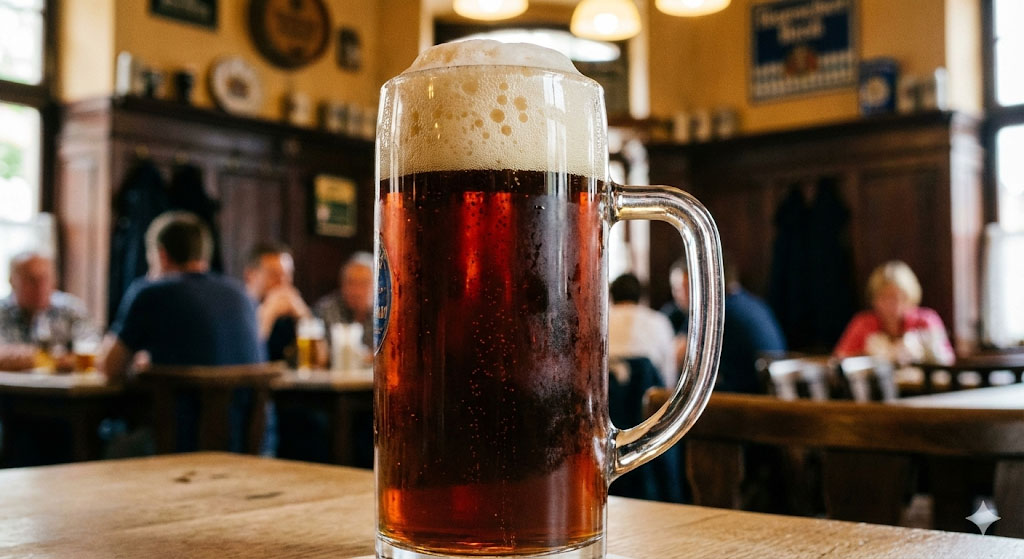
The result? A delightfully balanced beer—reminiscent of a Negra Modelo, but cleaner, richer, and without that tell-tale corn adjunct note.
Project 2: “Shibakariki” (The Lawnmower)
My next project is a bit of a pun. If you translate “Shibakariki,” you get Lawnmower.
In the craft beer world, a “lawnmower beer” is something crisp and refreshing you want after a day of work. My version will be a Japanese-style rice lager using a grain bill of Pilsner malt and gelantized rice from Niigata, Japan. It’s destined to be a crisp treat for the first hot days of late spring, in the vein of a Sapporo or Kirin.
The only downside? Lagers demand patience. It’ll be at least three months from brew day to glass, but in the Methow, the best things are always worth the wait. Cheers!